
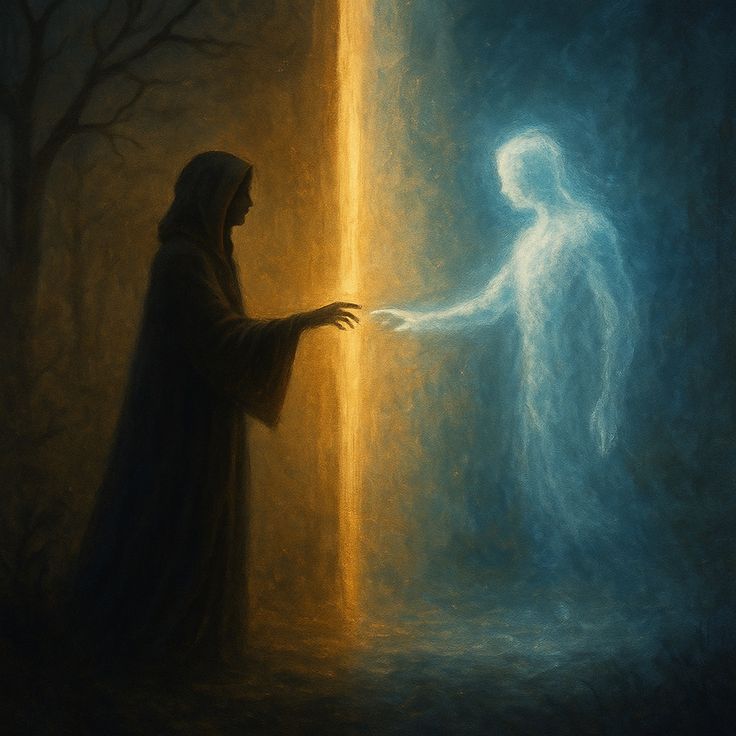
Death has always been one of the greatest mysteries of human life. In Hindu scriptures, the journey of the soul after death is described in detail. One of the most important texts that explains this journey is the Garuda Purana.
The Garuda Purana provides a deep explanation of what happens to the soul after a person dies, the journey it takes, the role of karma, and the concepts of heaven, hell, and rebirth.
The Moment of Death
According to the Garuda Purana, when a person dies, the physical body stops functioning but the soul (Atman) does not die. The soul leaves the body and enters a subtle form known as the preta body.
During this time, the soul often remains near the family and the place where it lived. It may feel confusion and attachment because it still identifies with its previous life.
The First Three Days After Death
For the first three days after death, the soul stays close to its home and relatives. It observes the mourning and rituals performed by the family.
During this period, the soul experiences hunger and thirst because it has separated from the physical body but still carries subtle desires.
This is why rituals like Pind Daan and Tarpan are performed in Hindu tradition. These offerings symbolically provide nourishment to the soul during its transition.
The First Ten Days: Formation of the Subtle Body
The Garuda Purana explains that during the first ten days after death, the soul gradually forms a subtle body with the help of ritual offerings made by family members.
Each day’s ritual contributes to forming different parts of this subtle body. Because of this belief, the first ten days of mourning and rituals are considered extremely important in Hindu culture.
The Eleventh to Thirteenth Day Rituals
On the 11th and 12th day, special purification rituals are performed to help the soul prepare for its onward journey.
By the 13th day, the soul begins its journey toward the realm of Yama, the god of death.
These rituals are meant to provide peace to the departed soul and support its spiritual transition.
Journey to Yama Loka
After the thirteenth day, the soul begins a long journey toward Yama Loka, the kingdom of the god of death.
According to the Garuda Purana, this journey is not easy. The soul travels through difficult paths and experiences various hardships depending on its past karma.
This journey is described as lasting approximately one year in spiritual time.
Judgment of the Soul
Once the soul reaches the court of Yama, its entire life is reviewed.
Every action performed during life—good or bad—is recorded by Chitragupta, the divine accountant of karma.
Based on this record, the soul is judged and assigned the results of its actions.
Heaven and Hell
If a person has performed good deeds, charity, kindness, and spiritual practices, the soul may go to heaven where it experiences happiness and comfort.
If the person committed harmful or sinful actions, the soul may be sent to hell where it experiences suffering as a result of its karma.
The Garuda Purana describes 28 different types of hell, each designed to punish specific types of negative actions.
Rebirth
After the soul completes its time in heaven or hell, it does not remain there forever.
The Garuda Purana explains that the soul eventually returns to Earth and takes a new birth. This new life is determined by the accumulated karma from previous lives.
This cycle of birth, death, and rebirth is known as Samsara.
The Message of the Garuda Purana
The core message of the Garuda Purana is clear: every action in life has consequences.
Good actions lead to peace and happiness, while negative actions lead to suffering.
Therefore, humans are encouraged to live a righteous life, practice compassion, help others, and follow the path of dharma.
Conclusion
The Garuda Purana offers a spiritual perspective on death and the afterlife. It teaches that death is not the end but a transition in the eternal journey of the soul.
By understanding these teachings, people can live more consciously and ethically, knowing that their actions shape their future beyond this life.